
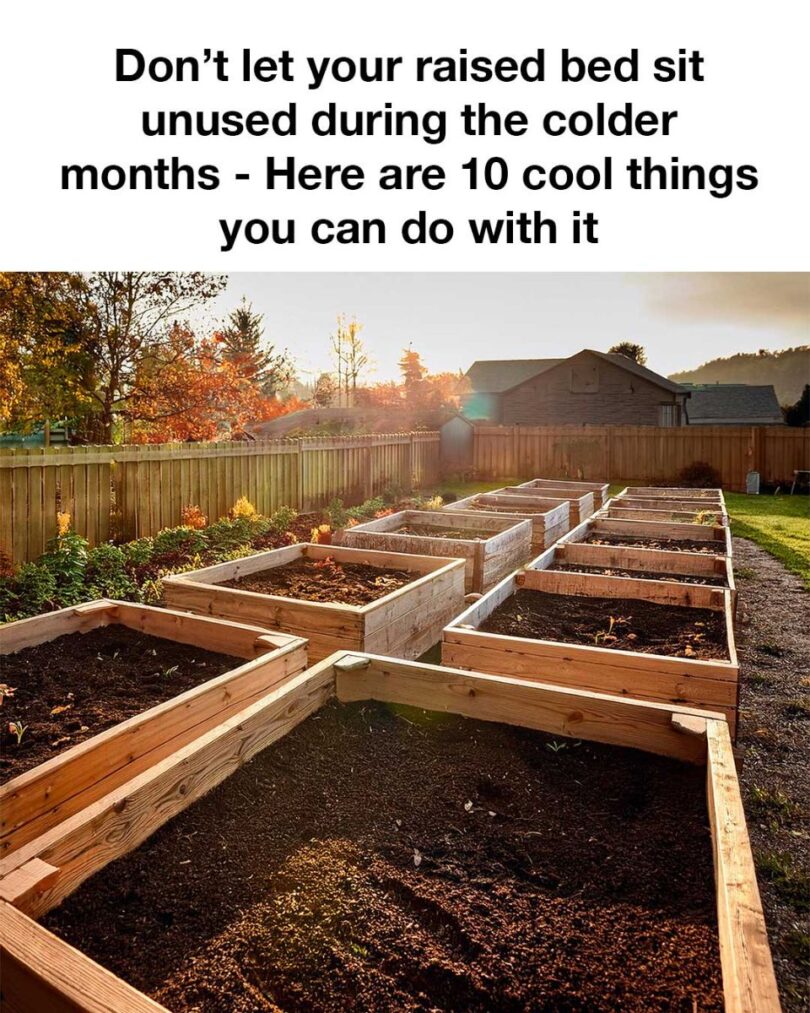
As the colder months approach, many gardeners allow their raised beds to go dormant, missing out on a wealth of opportunities. Instead of letting your garden lay fallow, there are multiple innovative and productive ways to utilize that space. Whether you’re looking to grow fresh produce, improve your soil quality, or create a haven for local wildlife, there are plenty of options to keep your raised bed active and thriving year-round.
Plant Cold-Hardy Vegetables for Winter Harvest
One of the simplest ways to keep your raised bed in use during the colder months is by planting cold-hardy vegetables. Varieties such as kale, spinach, carrots, and Brussels sprouts can withstand frosty conditions and even improve in flavor after exposure to cold weather. With proper planning and a little protection, you can enjoy fresh, homegrown vegetables throughout the winter.
Implement Season Extension Techniques
Season extension techniques, such as using row covers, hoop houses, or cloches, can significantly prolong the life of your growing season. These methods protect your plants from harsh weather and frost, allowing you to cultivate a wider range of crops. By effectively managing temperatures and moisture levels, you can grow more diverse and abundant harvests even when the weather turns cold.
Use Your Raised Bed for Composting
During the off-season, your raised bed can serve as a convenient composting site. Layer kitchen scraps, garden waste, and other organic materials directly in the bed to decompose over the winter. This not only reduces waste but also enriches your soil with valuable nutrients, preparing it for planting in the spring.
Create a Winter Wildlife Habitat
Raised beds can be transformed into a winter sanctuary for local wildlife. Install bird feeders, plant native shrubs, or leave a section of the bed undisturbed to provide shelter and food for birds, insects, and small mammals. This not only supports biodiversity but also helps control pests and pollinate plants when the growing season resumes.
Cover Cropping: Nourish Your Soil for Next Season
Cover cropping is an excellent way to keep your soil healthy and fertile during the winter months. Planting cover crops like clover, rye, or winter peas can prevent soil erosion, suppress weeds, and add organic matter and nutrients back into the soil. When spring arrives, these crops can be turned under, providing your garden with a nutrient-rich foundation for the new growing season.
Grow Edible Perennials That Thrive in the Cold
Incorporating edible perennials into your raised bed can ensure year-round productivity. Plants such as asparagus, rhubarb, and certain herbs can tolerate cold temperatures and even thrive during winter. These perennials require less maintenance and will continue to produce year after year, making them a valuable addition to any raised bed.
read more on next page