
Success Tips
- Work with a well-hydrated dough: A high water-to-flour ratio is key to ciabatta’s airy, open crumb. The dough’s sticky texture is normal, so don’t worry about it.
- Minimize kneading: Unlike other breads, ciabatta dough is not overworked. Build the dough’s structure gradually by folding and stretching rather than vigorous kneading.
- Allow for extended fermentation: Let the dough rise slowly, ideally in the fridge for several hours or overnight, for the best flavor and texture.
- Prep your baking surface: Ciabatta is best baked on a pizza stone, baking sheet, or cast-iron skillet preheated to a high temperature to create the characteristic crunchy crust.
- Handle the dough gently: Avoid deflating the dough too much when shaping it. Do not force or handle it roughly.
Procedure
- Knead the Flour
- In a large bowl, mix the sugar, salt, and flour. In a separate dish, mix the yeast with lukewarm water and let it sit for 5 minutes to froth.
- Combine the flour mixture, yeast mixture, and olive oil. Mix together and knead for a couple of minutes until the dough forms.
- Initial Rise
- Cover the bowl with a damp towel or plastic wrap and let it rise in a warm place for 1 to 2 hours, or until it has doubled in size.
- Fold and Stretch
- After the dough has risen, transfer it to a lightly floured surface. Stretch and fold the dough in half, then rest it for 15 minutes.
- Continue stretching and folding the dough every 15 minutes for 1 hour. This prevents over-kneading while developing the dough’s structure.
- Shape the Dough
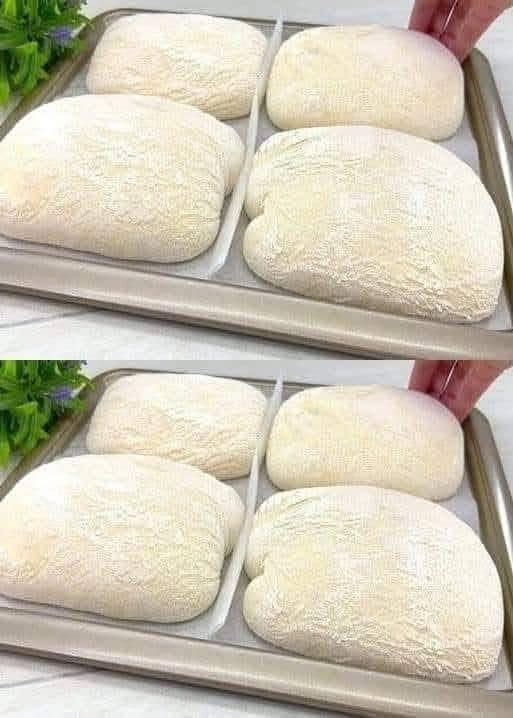
- After the final fold, divide the dough into two portions. Gently roll each piece into a rough rectangle, being careful not to deflate the dough too much.
- Place the shaped dough on a parchment-lined baking sheet, leaving plenty of space between them. Cover with a towel and let rise for another 30-45 minutes.
- Get the Oven Ready
- Preheat the oven to 220°C (430°F). Place a pizza stone or baking sheet in the oven to heat up.
- Bake the loaves for 20 to 25 minutes until golden brown, and they sound hollow when tapped on the bottom.
- Let the bread cool on a wire rack before slicing and serving.
Pages: 1 2